If glare bothers you, especially around water, wet roads or long drives, polarised sunglasses are the better pick. If you mostly need basic sun protection, use digital screens often or want a lower price, non-polarised sunglasses are fine and sometimes better. Whether you are browsing branded sunglasses online or shopping in-store, neither type is “better” in all circumstances. This guide explains how they differ, so you can match the lens to your day:
What Polarisation Really Does
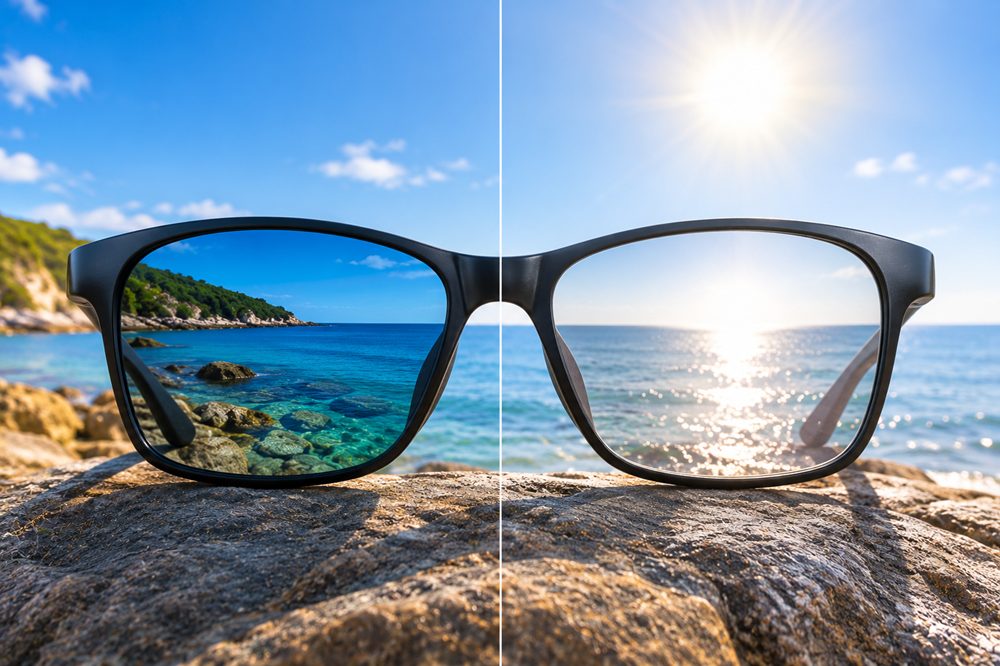
Sunlight travels in every direction, but when it bounces off a flat surface such as a road, car bonnet or lake, it becomes horizontal glare. It's the nasty, blinding glare that makes you squint.
A polarised lens is a lens with a special chemical film that has a vertical filter. It blocks the horizontal light and allows the useful vertical light to pass. The result is less glare, richer contrast and reduced eye strain.
One thing that needs to be clarified: polarisation is not a UV protection. These are two different things. A polarised lens without UV400 still lets harmful rays in, so make sure you have both.
Polarised Sunglasses Pros and Cons
When polarised lenses win:
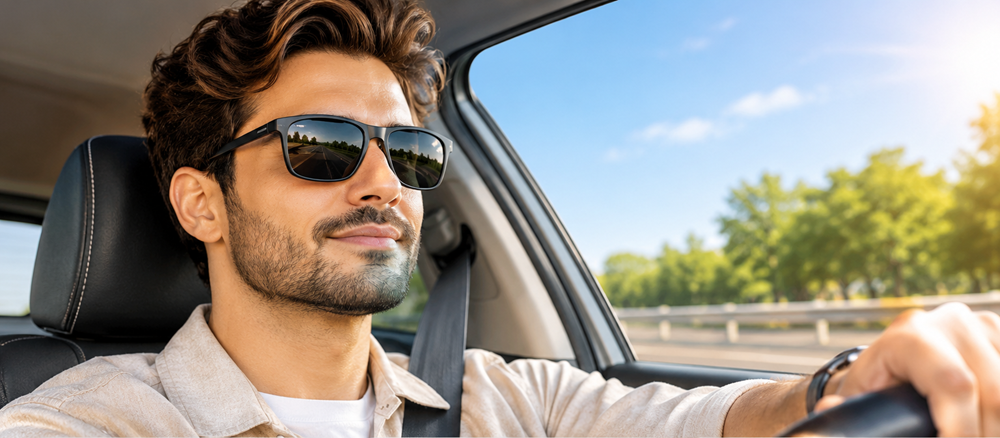
- Driving in daylight, especially on wet or reflective roads.
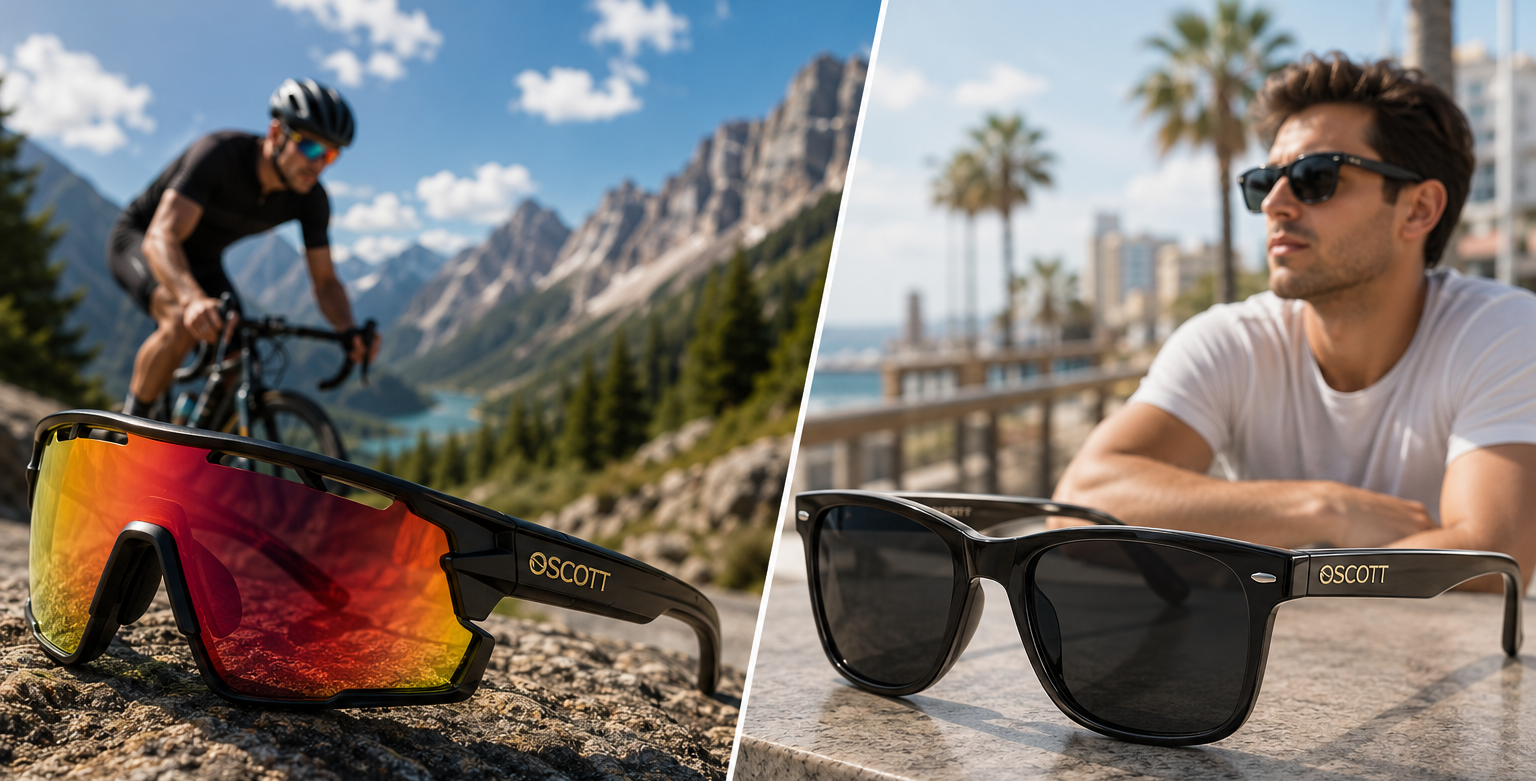
- Fishing, boating, days at the beach and anything around water.
- Long hours in the outdoors. Less glare = less eye fatigue.
- Trips in snow and high altitude with strong reflections.
- Cycling and riding two-wheelers in the harsh sun.
Where they are lacking:
- They can make some LCD, LED and digital dashboard screens appear dim, patchy or rainbow tinted.
- It is awkward to read a phone or ATM screen at certain angles.
- They are usually more expensive than basic non-polarised pairs.
- They are not a replacement for night vision, as they darken what you are looking at.
You can try a simple test yourself: with the sunglasses on, tilt your head while looking at your phone screen. If the display goes dark at some angles, that’s polarisation at work.
When Non-Polarised Sunglasses Make Sense
Non-polarised lenses decrease brightness evenly, similar to turning down a dimmer switch. They do not filter glare selectively, but if they have the proper UV400 protection, they will still protect your eyes.
In fact, many people prefer them in some situations. For instance, polarised lenses are often frowned upon for pilots as they may interfere with reading cockpit instruments. Likewise, for anyone who regularly stares at digital screens outdoors, such as delivery riders using maps or people working on a tablet in the sunshine.
They are also easier to find in fashionable shapes and colours and are generally cheaper.
Polarised and Non-Polarised: Quick Comparison
| Factor | Polarised | Non-Polarised |
|---|---|---|
| Glare reduction | Effective for flat, reflective surfaces | Basic overall dimming |
| Contrast & Clarity | Noticeably better outside | Standard |
| Visibility of digital screens | Can be influenced | Normal |
| UV protection | Required UV400 separately | Required UV400 separately |
| Price | Higher | Lower |
| Best for | Driving, water, long hours outdoors | Casual wear, screen-heavy use |
How to Tell If Your Sunglasses Are Really Polarised
A quick check helps since many sellers' label lenses as polarised without proof.
- The screen test: Place your lens on an LCD screen and rotate it to 90 degrees. If it is a true polarised lens, then at some angle the screen will go dark.
- The two-lens test: Hold two polarising lenses at right angles to each other. They should be nearly black.
- Check the tag: Look for a clear “polarised” and “UV400” on the label or inside the temple.
- Look at the shine: Look at a shiny road or a body of water. You should be able to see less glare.
If a pair fails these tests, it is tinted glass or plastic, not true polarisation.
Consider Your Day: Make a Choice
Rather than asking, which is better, ask where you will wear them the most.
If you spend most of your time driving, riding or outdoors, polarised is a wise upgrade. If you walk short distances mostly, care more about style, or use digital displays all day, non-polarised is perfectly good.
Most people have both: one polarised for the car and for trips, and one non-polarised for everyday errands and fashion. When buying premium sunglasses online, don’t rely just on the pictures, but go to the product page and check the lens material, UV400 certification and a clear polarisation label.
What to Look for Beyond Polarisation
You see, the lens is only half of it. A good pair also depends on:
- Lens material: Polycarbonate is lightweight and shatterproof; glass offers the best clarity but is heavier.
- Tint colour: Grey maintains colour fidelity, brown enhances contrast, and green is in between.
- Fit: Sunglasses that slide or pinch will never be worn.
- Coverage: Wraparound or bigger lenses block the side light better.
- Authenticity: Legitimate branded sunglasses for sale online should feature brand details, warranty details and a solid return policy. Be careful of deep discounts on name brands, as knock-offs often skip UV testing.
When You Can, Give Them a Try in Person
You can test polarisation easily by using your own eyes. In a trusted spectacle shop in Bopal, you can hold a pair up to a phone screen, check the tint in natural light and have the nose pads and temples adjusted to suit your face. If you wear prescription glasses, you may also want to ask about prescription polarised lenses, so you don’t have to switch between two pairs of glasses.
Conclusion
Polarised lenses help reduce glare and make those bright outdoor days a bit more comfortable. They can change how you see screens and are pricier. Non-polarised sunglasses are simpler, cheaper and just as protective if they have UV400. Choose based on where you spend your time and don’t buy a pair without checking its UV rating first.