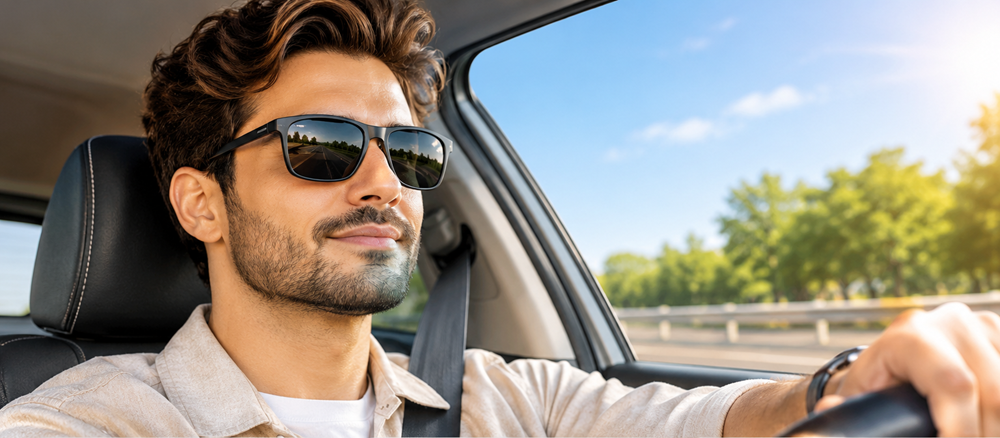
If you drive daily in Ahmedabad, you know the problem. There’s low sun on SG Highway in the evening, headlight glare on the Ring Road at night, dust all year, and the occasional monsoon downpour. The best sunglasses for driving cut glare without dimming your view, stay comfortable on long drives, and don’t block your side vision. This guide covers lens features, frame fit and sunglasses so you can choose with confidence.
Why Driving Is Different from Everyday Wear
Reading on your phone and driving on a highway are two different visual jobs. Behind the wheel, your eyes keep shifting between the dashboard, the mirrors and the road far ahead, while handling bright sun, oncoming headlights and moving reflections. A small prescription error that feels fine at home becomes tiring at 80 km/h.
Eye-care professionals generally agree that an accurate, up-to-date prescription matters more than any special tint. So, start with an eye test every one to two years and treat everything below as an upgrade on top of that.
Lens Features Worth Paying For
Here’s what makes a difference on the road:
- Anti-reflective (anti-glare) coating: Cuts reflections off the lens surfaces and reduces the starburst effect around headlights at night. For most drivers, this is the single most useful add-on.
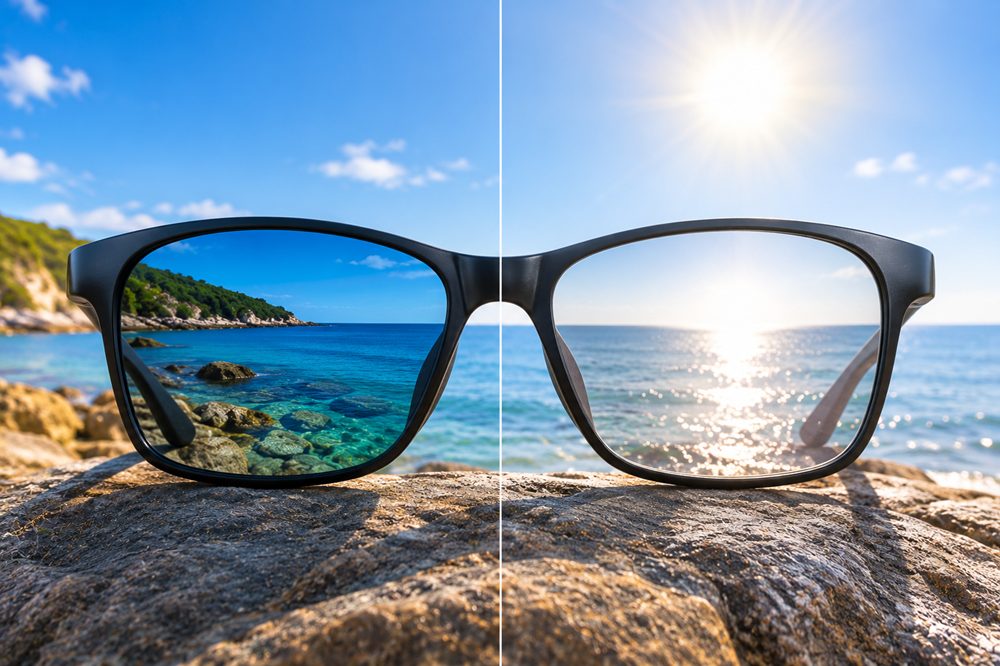
- Polarized lenses: Filter the flat, horizontal glare from wet roads, car bonnets and other vehicles. Excellent in daylight but not meant for night driving. They can also make some digital dashboards look dim or patchy, so check yours before buying.
- UV400 protection: Blocks UVA and UVB rays. This is non-negotiable for any sunglasses.
- Photochromic (light-adaptive) lenses: Most activate with UV light, and windshields block much of it, so many pairs barely darken inside a car. Ask for a type designed to work behind glass.
- Scratch-resistant and water-repellent coatings: Useful against dust, rain spots and the micro-scratches that scatter light at night.
- High-index thin lenses: If your prescription is strong, these are lighter and flatter, with less edge distortion in your peripheral view.
A word on yellow “night driving glasses”: they’re heavily marketed, but research hasn’t shown that they improve night vision, and the tint reduces the light reaching your eyes. A good anti-glare coating and the correct prescription do far more.
If you’d like to compare styles at home first, you can buy sunglasses online. Just note the measurements printed inside the temple of a pair that already fits you well and use them as your reference.
Frame Comfort: The Part Most People Ignore
A frame that feels fine for an hour of reading can become irritating on a two-hour drive. Opticians see this often, and it usually comes down to a few details:
- Temple thickness: Chunky temples can block your side view when you check blind spots. Slim temples are the safer choice.
- Lens depth and shape: Very narrow or small lenses shrink your field of view. Look for moderate height and width.
- Nose pads: Adjustable pads on metal or titanium frames stop slipping when you glance down at the dashboard, especially in summer heat.
- Weight: Lightweight frames reduce pressure on the nose and ears, which matters more on long highway stretches than it does in the shop.
Try your frame while sitting upright and then looking down and sideways, the way you would at the wheel. If it shifts, it needs adjusting or replacing.
Driving Sunglasses Explained
Not every dark lens is right for driving. Tint colour changes what you see, and darkness is graded by category.
Common tints and what they do:
- Grey: Keeps colours true, so traffic lights and brake lights stay easy to read. A reliable all-rounder.
- Brown or amber: Boosts contrast, which helps on hazy or dusty days.
- Green: Balanced colour with slightly sharper contrast than grey.
Quality matters too. Dark lenses without proper UV filtering can do more harm than good, because a dark tint opens your pupils wider and lets in more UV. So, if you’re shopping for premium sunglasses online, check for a clear UV400 label, the lens material, and whether the seller offers fit adjustments or an easy return option. A lower price isn’t worth it if the lens quality is unclear.
Which Setup suits your Driving?
- Daily city commute: Clear lenses with anti-reflective coating, plus a pair of grey or green sunglasses for midday.
- Frequent highway trips: Polarized prescription or non-prescription sunglasses and a lightweight frame.
- Mostly night driving: Anti-reflective coating and an accurate prescription, which matter most here.
- Strong prescription: High-index lenses in a frame with a secure nose fit.
Get Your Fit Checked in Person
Driving glasses depend on exact measurements: pupillary distance, lens height, bridge width and frame curve. An online listing can’t judge those for you. Whether you search for the best optician in Bopal or visit a trusted local clinic, look for someone who checks your eyes properly, explains the reason behind each coating, and adjusts the frame on the spot. Bring your current glasses and mention how long you usually drive. That gives them real information to work with.
Conclusion
The best sunglasses for driving aren’t the most expensive or the darkest. They’re the ones with the right prescription, a glare-reducing coating, a frame that doesn’t block your view, and, for sunny days, a properly rated pair of sunglasses. Start with an eye test, build up from there, and always try the fit before you commit.